Automating Ticket Refund Processing
Ticketing platform handling refunds for cancellations, rescheduling, and customer requests. Refunds are a frequent operation that directly impact support workload and service quality.
Outcome
Problem
Refunds were handled manually via email and phone.
Administrators had to process each request step by step, which made the process slow, inconsistent, and error-prone.
Why It Matters
Refunds directly impact both user experience and operational efficiency.
Slow processing and errors create delays, increase workload, and affect trust.
Research
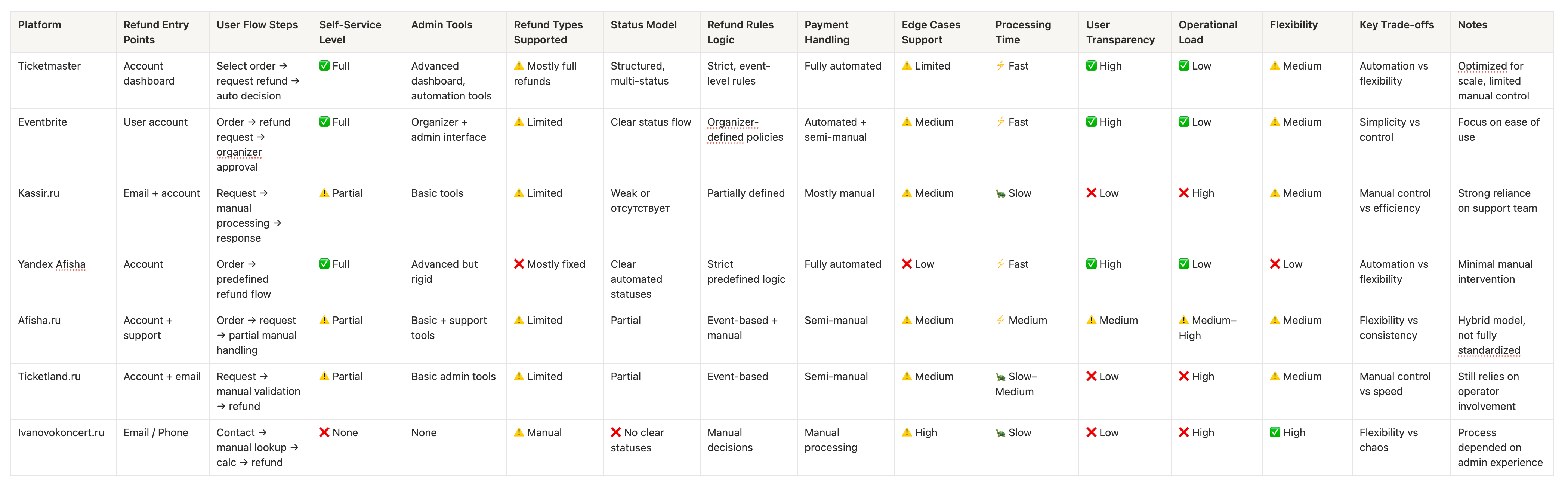
As part of the research, I conducted a comparative analysis of both international and Russian ticketing platforms, focusing on how refund processes are structured, how users initiate requests, and how they are handled operationally. I analyzed the end-to-end refund flow, including entry points, processing methods, levels of automation, and system capabilities, to identify common patterns and gaps across different solutions.
🔥 Key Issues
Most services let users request refunds directly from their account, without contacting support. These requests are handled in one place, which makes the process faster and easier to manage. Refund conditions are usually tied to a specific event and applied consistently, and statuses help track what’s going on with each request. At the same time, fully automated systems often don’t handle edge cases well, so it’s important to keep some flexibility for manual decisions.
User Needs
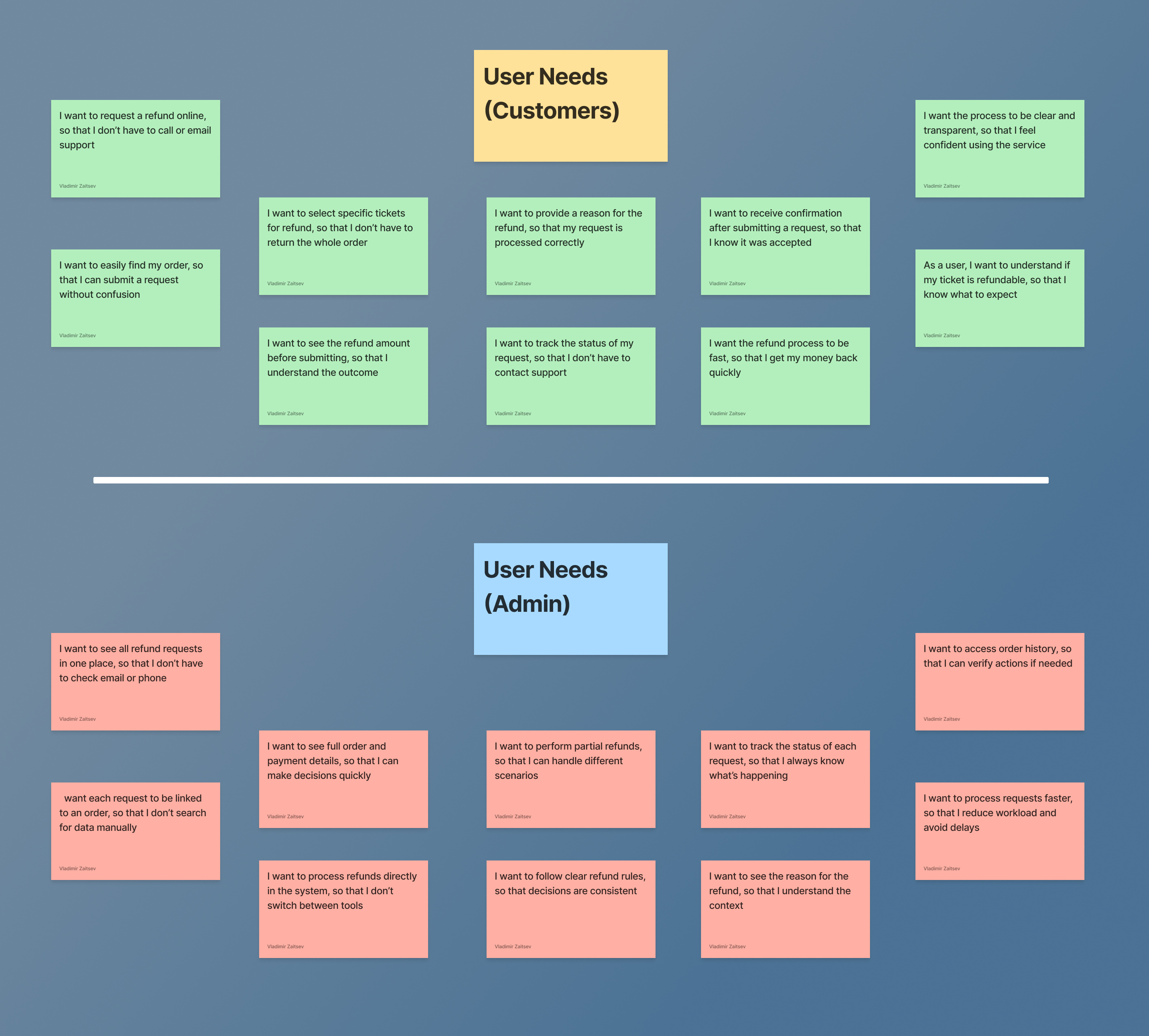
Based on the analysis of refund processes and common scenarios, I identified key needs for both customers and administrators
Customers
request a refund online without contacting support
easily find their order and submit a request
understand refund eligibility and conditions
see the refund amount before submitting
track the status of their request
Administrators
manage all refund requests in one place
access full order and payment data
process refunds directly in the system
handle both full and partial refunds
track request status and history
Before (Manual Workflow)
Before the implementation of the system, the entire return process was built around manual communication and did not have a single interface.
What the process looked like:
The user applied for a refund via email or phone
The administrator manually found the order in the system
Checked the return conditions (depending on the event)
Clarified details with the user if necessary
Calculated the refund amount
Performed a refund through the payment system
Solution
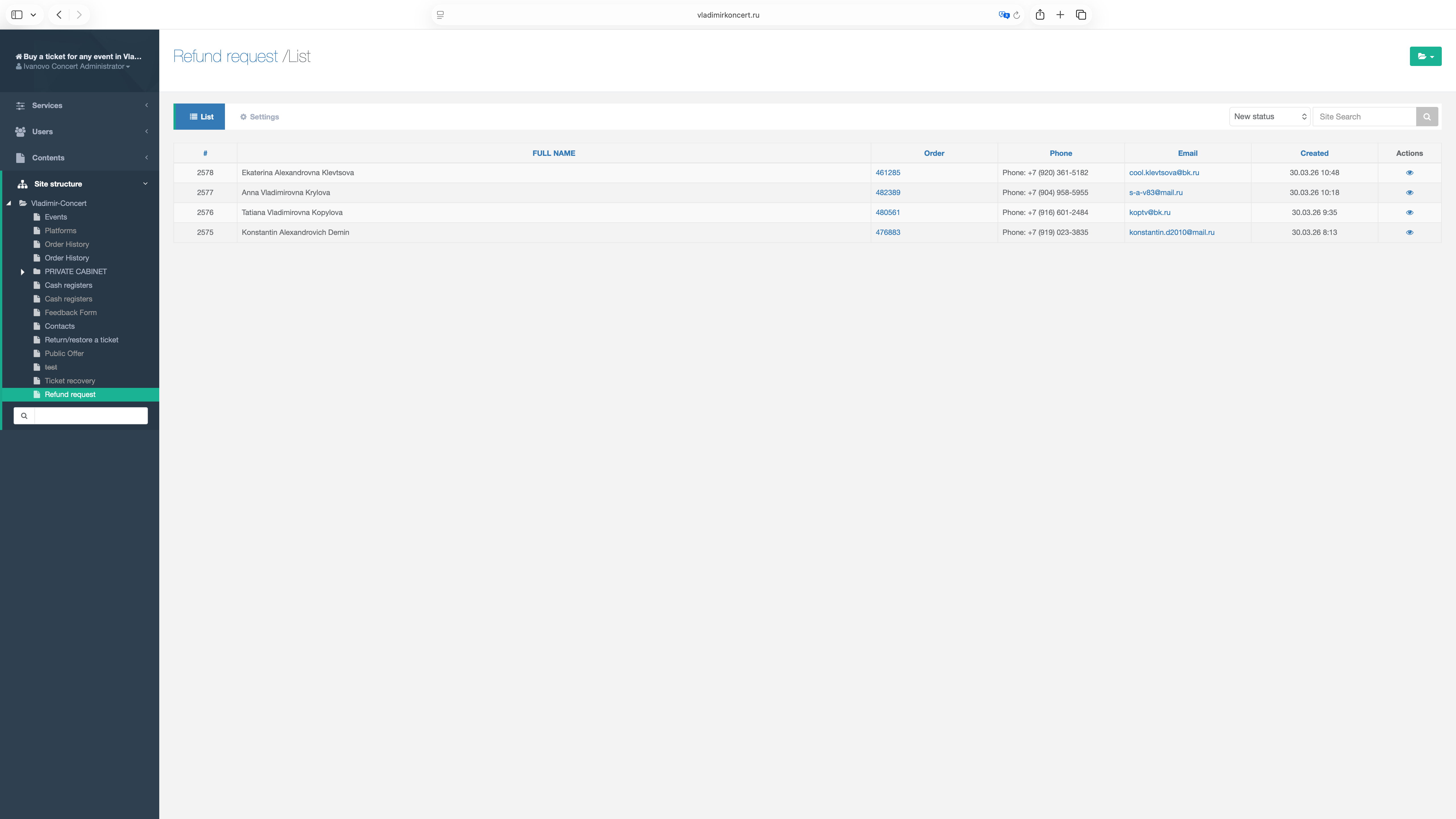
I designed a refund management system within Ivanovokoncert.ru that replaces manual handling with a centralized admin workflow. Refund requests are submitted via the website and automatically linked to orders.
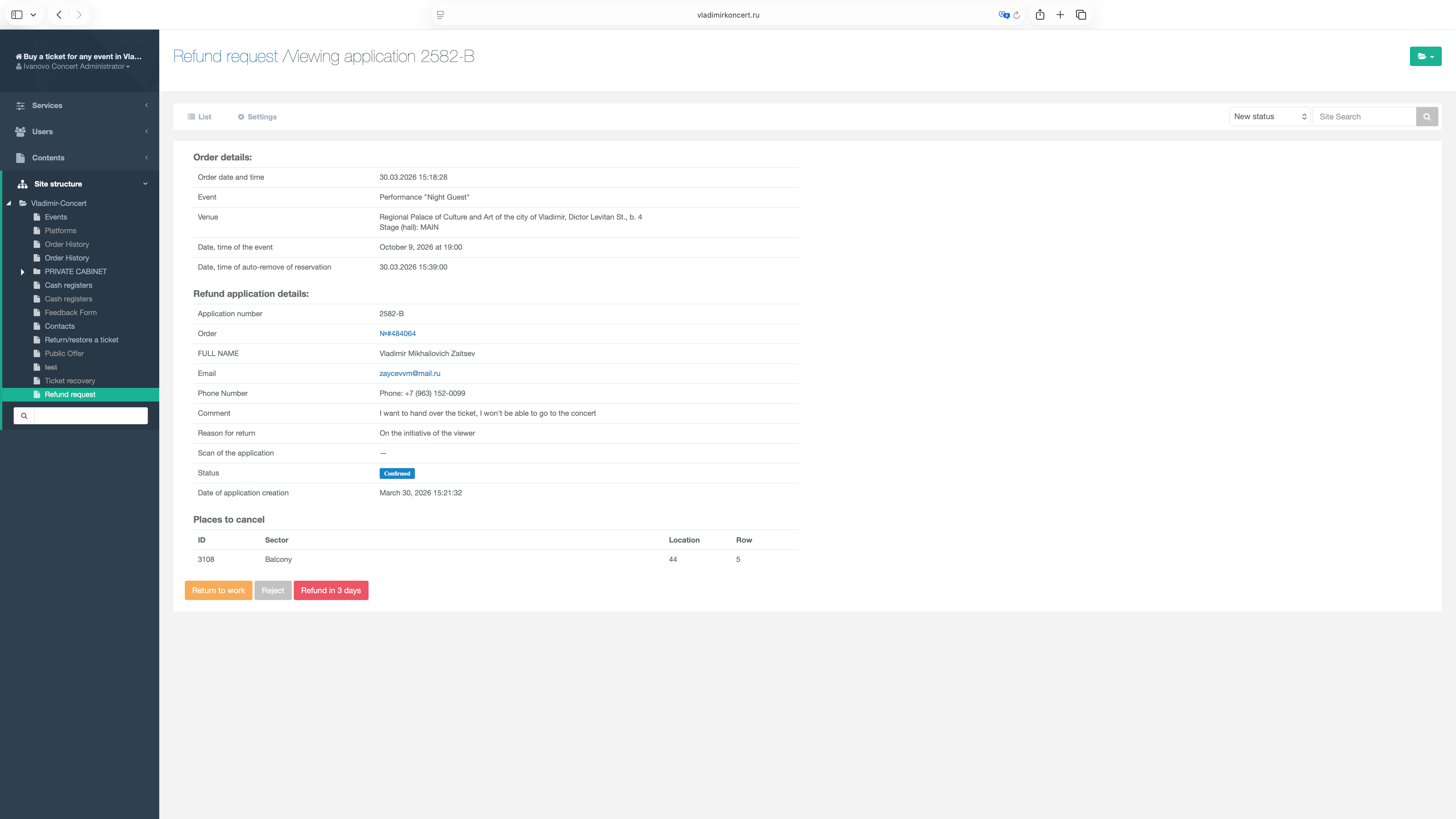
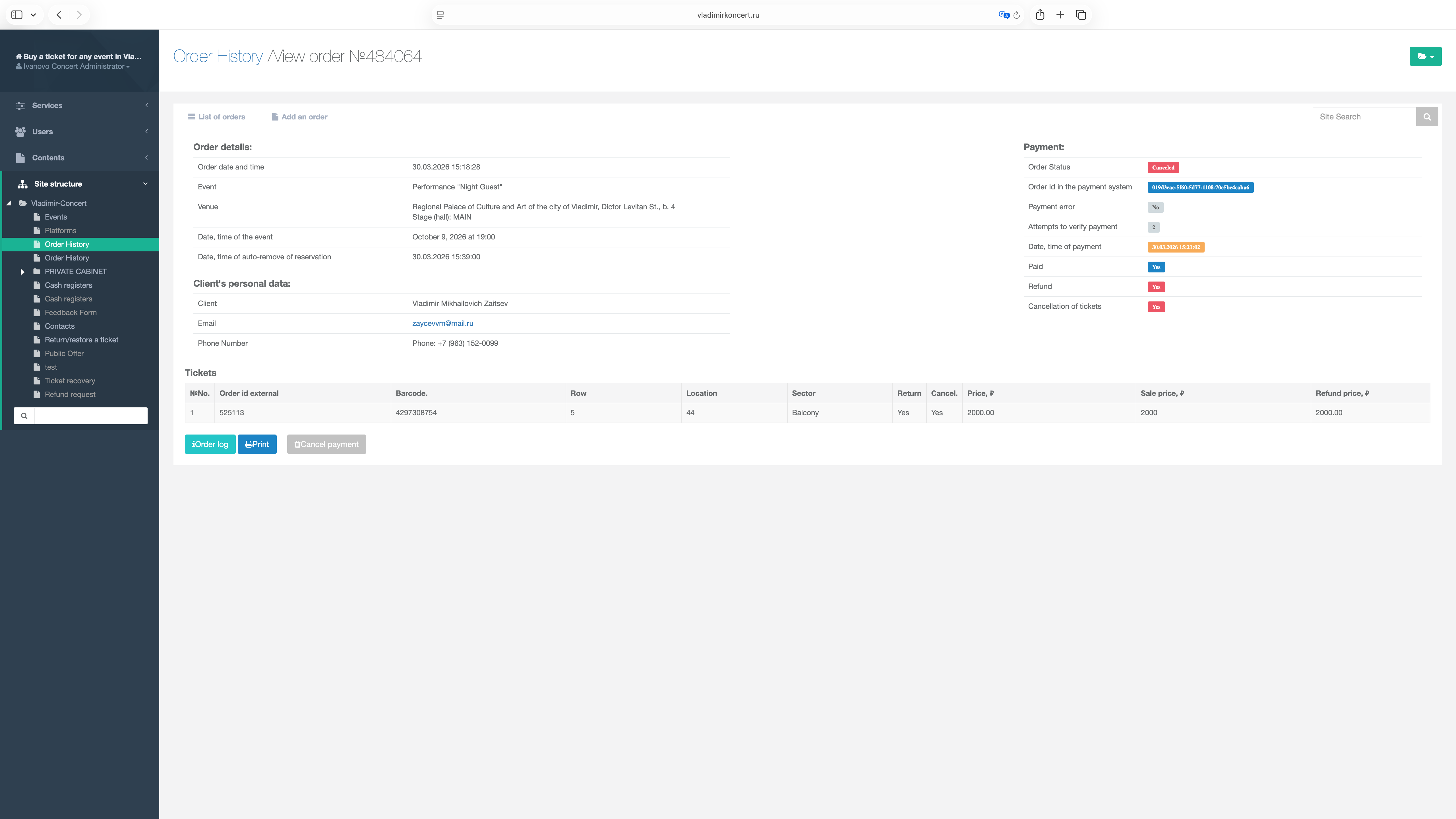
Administrators manage all requests in a single interface, where they can view customer data, order details, tickets, and payment status. This eliminates the need to switch between systems.
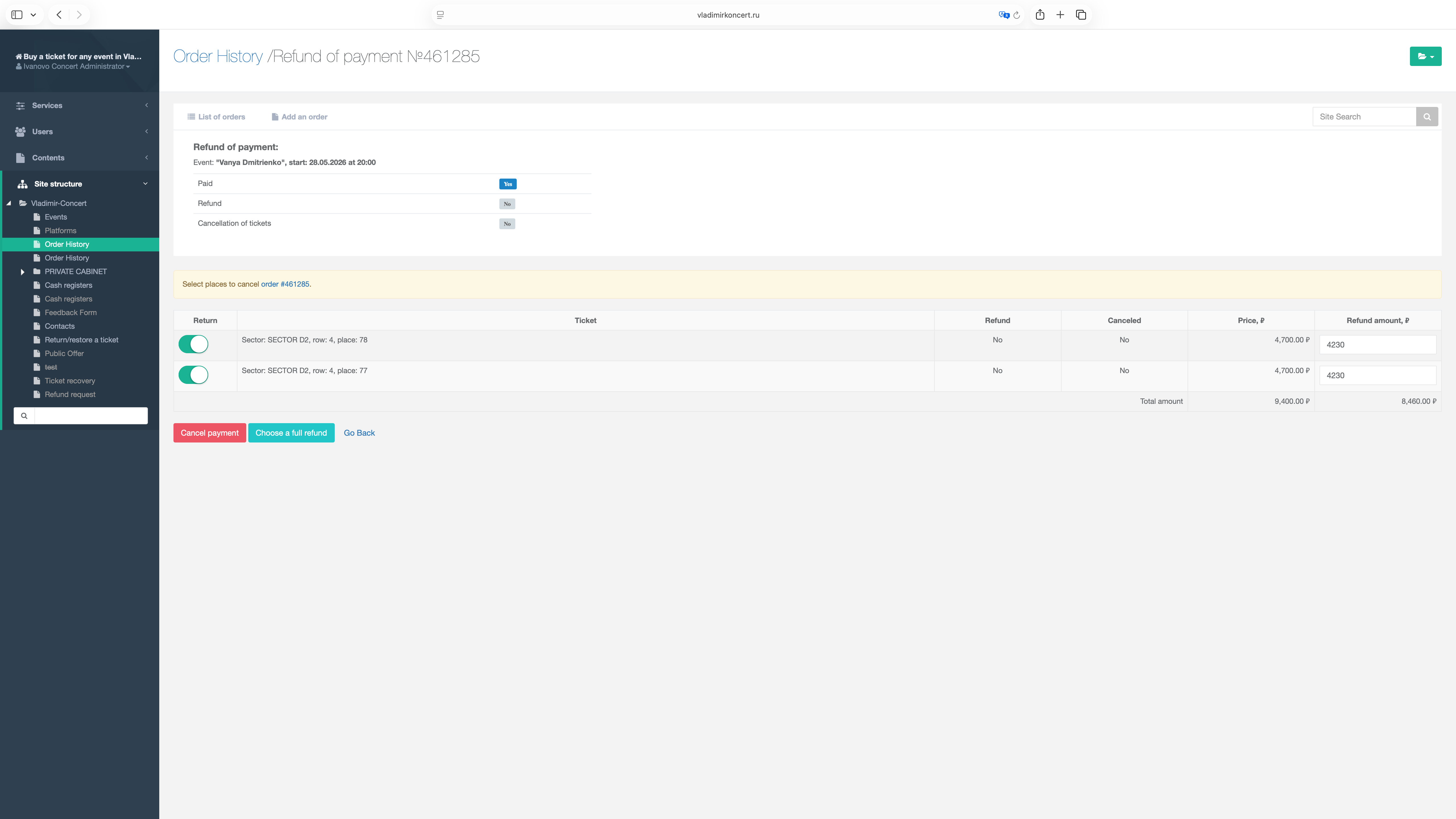
The system allows processing full or partial refunds directly in the interface, with clear request statuses and structured workflow.
System
The solution is built as a unified system that connects all key entities and governs how refund requests are processed. Each refund request is linked to a specific order and operates at the ticket level, allowing both full and partial refunds depending on the case. The system takes into account event specific refund conditions, ensuring that each decision aligns with predefined rules. Throughout the process, the request moves through a clear set of statuses such as new, in progress, completed, or rejected, providing transparency and control for administrators. This structure ensures that all refund operations are consistent, traceable, and managed within a single workflow.
Impact
The new system streamlined the refund process by replacing manual communication with a structured workflow. It reduced processing time, lowered the operational load on administrators, and minimized errors in refund handling. As a result, refund operations became faster, more consistent, and easier to manage across the team.